Key Insights
- South Congress centers on a walkable retail and dining strip, while East Austin spreads across a warehouse and bar district built for nightlife and live music.
- East Austin anchors Austin's electronic music scene, with warehouse-venue tickets starting at $51 and East 7th Street rooms starting near $86.
- The Continental Club on South Congress represents SoCo's heritage live-music side, contrasting East Austin's newer Moody Amphitheater and Scoot Inn.
- South Congress leans toward tourists, boutique shopping, and daytime foot traffic; East Austin skews toward locals, late-night crowds, and creative workspaces.
- Both corridors sit within roughly a mile of downtown, so relocation buyers gain short commutes and true car-optional living.
- Investors weigh SoCo's short-term rental demand against East Austin's tenant turnover from a younger, renter-heavy population.
If you are relocating from Portland, Brooklyn, or the Bay Area and researching South Congress vs. East Austin, here is the short version: South Congress is Austin's polished shopping and dining promenade, and East Austin is the sprawling, edgier home of the city's bar and live-music culture. Both sit close to downtown, both draw newcomers, and both carry a distinct daily rhythm you can feel within a block of arriving.
The choice usually comes down to whether you want a curated, walk-out-your-door retail experience or a spread-out district where the energy peaks after dark. Neither is objectively better. They attract different buyers, reward different lifestyles, and price differently block to block.
Below, you get an honest, local comparison of vibe, walkability, nightlife, and what to expect as a buyer, seller, or investor in each corridor.
What is the difference between South Congress and East Austin?
South Congress is a compact, walkable corridor built around boutique retail, restaurants, and skyline views, while East Austin is a larger, more residential district known for bars, warehouse venues, and a locals-first nightlife scene. SoCo concentrates its energy along one main avenue; East Austin distributes it across numbered streets like East 4th, East 6th, and East 7th.
The comparison below sums up how the two corridors differ across the factors relocation buyers ask about most.
| Factor | South Congress | East Austin |
|---|---|---|
| Core draw | Boutique shopping and dining | Bars, venues, nightlife |
| Layout | One main strip | Spread across numbered streets |
| Peak energy | Daytime and early evening | Late night |
| Crowd | Tourists and shoppers | Locals and creatives |
| Housing feel | Established, higher priced | Mixed, fast-changing blocks |
| Best for | Walk-out-the-door retail | Nightlife and studios |
Geography and proximity to downtown
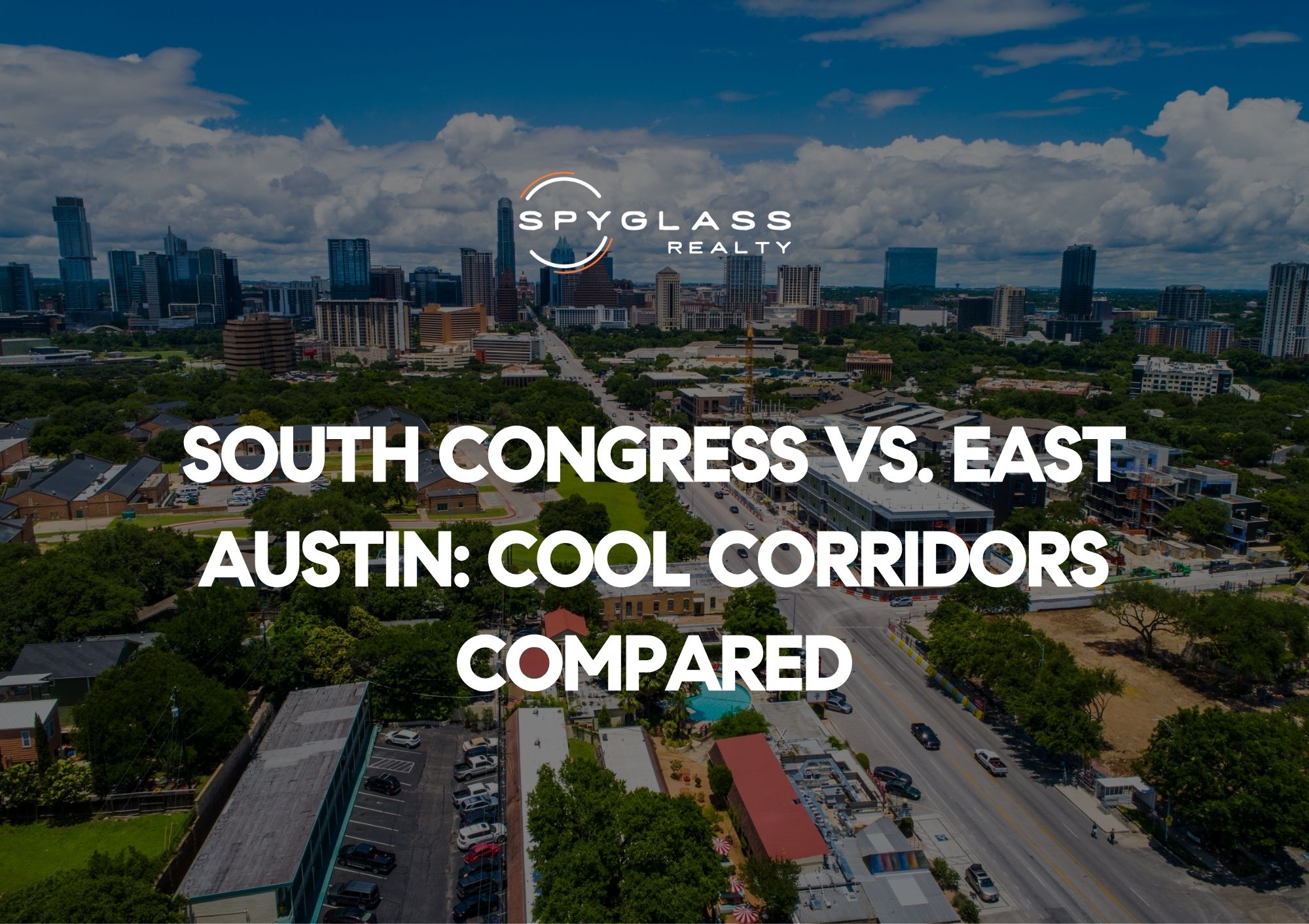
South Congress runs south from Lady Bird Lake, so you are looking up at the skyline as you walk the strip. East Austin sits just east of I-35, wrapping the Waterloo Greenway park corridor and the numbered east streets. Both put you within roughly a mile of downtown, which is the shared reason relocation buyers gravitate to each.
South Congress: the walkable shopping and dining corridor
South Congress, known locally as SoCo, is Austin's most concentrated pedestrian retail strip, lined with independent boutiques, restaurants, and the postcard skyline view that draws visitors year-round. If you want a corridor where daily errands, brunch, and browsing happen on foot, SoCo delivers that in the tightest footprint of the two.
Shopping and dining density
The heart of South Congress packs boutiques, coffee shops, and sit-down restaurants into a walkable stretch between Riverside and Elizabeth Street. That density is the corridor's defining trait: you park once, or skip the car entirely, and move between destinations on a single sidewalk. For newcomers used to walkable coastal-city cores, this is the Austin neighborhood that feels most immediately familiar.
The Continental Club and SoCo's music heritage
South Congress is not only shopping. The Continental Club, one of the venues that rounds out Austin's live-music picture according to a September 2025 Austin events roundup, anchors the corridor's heritage roadhouse and residency scene. It represents an older, more intimate side of Austin music than the warehouse rooms across the river.
Nearby residential pockets
Most of the housing near the strip sits in the residential pockets flanking it. Travis Heights and Bouldin Creek put you within walking distance of the corridor while offering established tree-lined streets. If you are moving with kids, the surrounding area has easy access to green space, and our roundup of family activities in and around downtown Austin covers what is close by. You can browse the corridor itself through our South Congress listings.
East Austin: bars, warehouses, and late-night music
East Austin is the city's nightlife and live-music engine, spread across bars, restaurants, and warehouse venues along the numbered east streets. Where South Congress peaks by day, East Austin comes alive after dark, and it draws a more local, creative crowd than the tourist-heavy SoCo strip.
Warehouse venues and the EDM scene
East Austin serves as the city's primary electronic-music hub through its warehouse venue, where tickets start at $51, according to the same 2025 events roundup. That warehouse format, large rooms in converted industrial space, is something you will not find on South Congress, and it shapes the district's after-midnight identity.
East 7th Street and the numbered-street clubs
The east numbered streets carry much of the nightlife load. Riviere Austin, an East 7th Street room, listed tickets starting at $86 for a Chief Keef show in the September 2025 lineup. Scoot Inn on East 4th Street runs at club scale and frequently catches touring artists on their first headline runs, giving the district a talent-discovery reputation.
Moody Amphitheater and Waterloo Greenway
On the district's western edge, Moody Amphitheater sits in the Waterloo Greenway park corridor, adding a newer outdoor venue to the east-side mix. Between the warehouse EDM room, East 7th clubs, and Moody's open-air stage, East Austin offers a wider range of venue formats than any single strip on the south side. The nearby Mueller master-planned community gives buyers a more structured, newer-build alternative just north of the nightlife core.
South Congress vs. East Austin: real estate and price differences
In the South Congress vs. East Austin real estate comparison, SoCo generally commands a premium for its walkable, established residential pockets, while East Austin offers a wider price spread because its blocks are still transitioning. Exact price-per-square-foot figures move month to month, so verify current numbers against live listings rather than any static quote.
Why South Congress prices tend to run higher
South Congress and its adjacent neighborhoods have been established for decades, so inventory is limited and lots are prized for their walkability and skyline proximity. That scarcity supports higher pricing per square foot than most of the east side. For buyers, that means competition for a smaller pool of homes near the strip.
Why East Austin prices vary block to block
East Austin's housing stock ranges from original bungalows to new-construction infill, sometimes on the same street. That mix produces a wider price range and more opportunity to find value, but it also means condition and quality vary sharply from one address to the next. Touring in person matters more here than in SoCo's more uniform pockets.
What relocation buyers should verify
If you are moving in from out of state, confirm noise exposure, short-term rental rules, and flood considerations near the lake before you commit. Newcomers weighing the broader Texas move should also read our honest breakdown of relocating from Florida to Texas for cost-of-living and tax context. You can compare active east-side inventory through our East Austin listings.
Which corridor fits you: buyers, sellers, and investors
Choose South Congress if you want a walkable, retail-forward daily life and are comfortable paying a premium for scarcity. Choose East Austin if nightlife, live music, and a locals-first creative scene matter more, and you want a wider range of price points to work with.
For buyers
- SoCo buyers should expect limited inventory and prioritize walkability to the strip when comparing homes.
- East Austin buyers get more choices across price and condition, but should budget for renovation on older bungalows.
- Nightlife-adjacent buyers in either corridor should test noise levels on a weekend evening, not just a weekday afternoon.
For sellers
SoCo sellers can lean on walkability and the retail strip as headline features. East Austin sellers should highlight proximity to specific venues and the numbered-street nightlife, since that access is what buyers are chasing. Avoiding common pricing and prep errors matters in both, and our guide to home-selling mistakes to avoid in Austin walks through the pitfalls.
For investors
South Congress tends to draw strong short-term rental interest thanks to its tourist foot traffic, subject to city rules you must verify. East Austin's younger, renter-heavy population supports long-term rental demand near the venues, though tenant turnover can run higher. Investors should also confirm dog-friendliness for renter appeal; our list of Austin dog parks is a useful reference for amenity mapping.
Frequently asked questions
Is South Congress or East Austin better for nightlife?
East Austin is the stronger nightlife corridor, serving as the city's primary electronic-music hub with warehouse-venue tickets starting at $51 and East 7th Street clubs like Riviere Austin starting near $86, per a 2025 Austin events roundup. South Congress leans toward daytime dining, shopping, and heritage rooms like The Continental Club. If your priority is late-night variety across multiple venue formats, the east numbered streets around East 4th, 6th, and 7th are where Austin locals go.
Which is more walkable, South Congress or East Austin?
South Congress is the more walkable of the two because its shops, restaurants, and coffee spots concentrate along one continuous strip. East Austin's attractions spread across numbered streets, so you cover more ground and sometimes drive between clusters. Both sit within about a mile of downtown, but SoCo delivers the tighter, park-once experience that relocation buyers from walkable coastal cities tend to want.
Is South Congress or East Austin more expensive to buy in?
South Congress typically carries higher prices per square foot because its established residential pockets like Travis Heights and Bouldin Creek offer limited, prized inventory. East Austin spans a wider range since original bungalows sit alongside new-construction infill, sometimes on the same block. Because Austin pricing shifts month to month, check current figures against live listings for each corridor before you set a budget.
Where should out-of-state newcomers live in Austin?
Newcomers from Portland, Brooklyn, or the Bay Area often land on South Congress or East Austin because both offer the walkable, culture-rich living they left behind. Pick SoCo for boutique retail and skyline views, or East Austin for nightlife and a locals-first creative scene. If a car-optional core is essential, start with South Congress, then compare east-side value block by block with a local agent.
The bottom line on Austin's two coolest corridors
South Congress and East Austin are both magnets for newcomers, but they reward different lives. SoCo is the walkable, retail-forward strip with heritage music and higher, scarcer pricing; East Austin is the spread-out nightlife district with warehouse venues, more price variety, and a locals-first pulse.
The right pick depends on whether you want your days on foot among boutiques or your nights out among clubs and amphitheaters. Both keep you within about a mile of downtown, so you win either way on commute.
Before you commit, tour each corridor at different times of day and confirm the numbers that matter to your goals with a local expert.
Want help deciding between South Congress and East Austin for your move or investment? Let's talk through your options.
Talk to a Spyglass AgentDisclaimer: This article is for general educational purposes only and is not legal, tax, or financial advice. Every situation is different. Before making decisions about buying or selling a home, consult with your own real estate professional, lender, tax advisor, and other qualified professionals.