
Key Insights
- Austin routinely sees stretches of days at or above 100 degrees Fahrenheit, which pushes pools, shade, and outdoor cooling near the top of many buyer wish lists.
- Owning an in-ground pool in Central Texas usually means ongoing costs for chemicals, electricity, equipment repair, and seasonal service, not just the purchase price of the home.
- A pool can help a home stand out in summer, but it appeals to a narrower buyer pool, so resale impact depends heavily on neighborhood and condition.
- Shaded, climate-resilient backyards with native landscaping, covered patios, and mature trees often deliver heat relief at a lower long-term cost than a pool.
- Sellers benefit from documenting pool age, equipment, and maintenance history, since informed buyers price uncertainty into their offers.
- Buyers should budget for a dedicated pool inspection on top of the standard home inspection to avoid surprise repair costs after closing.
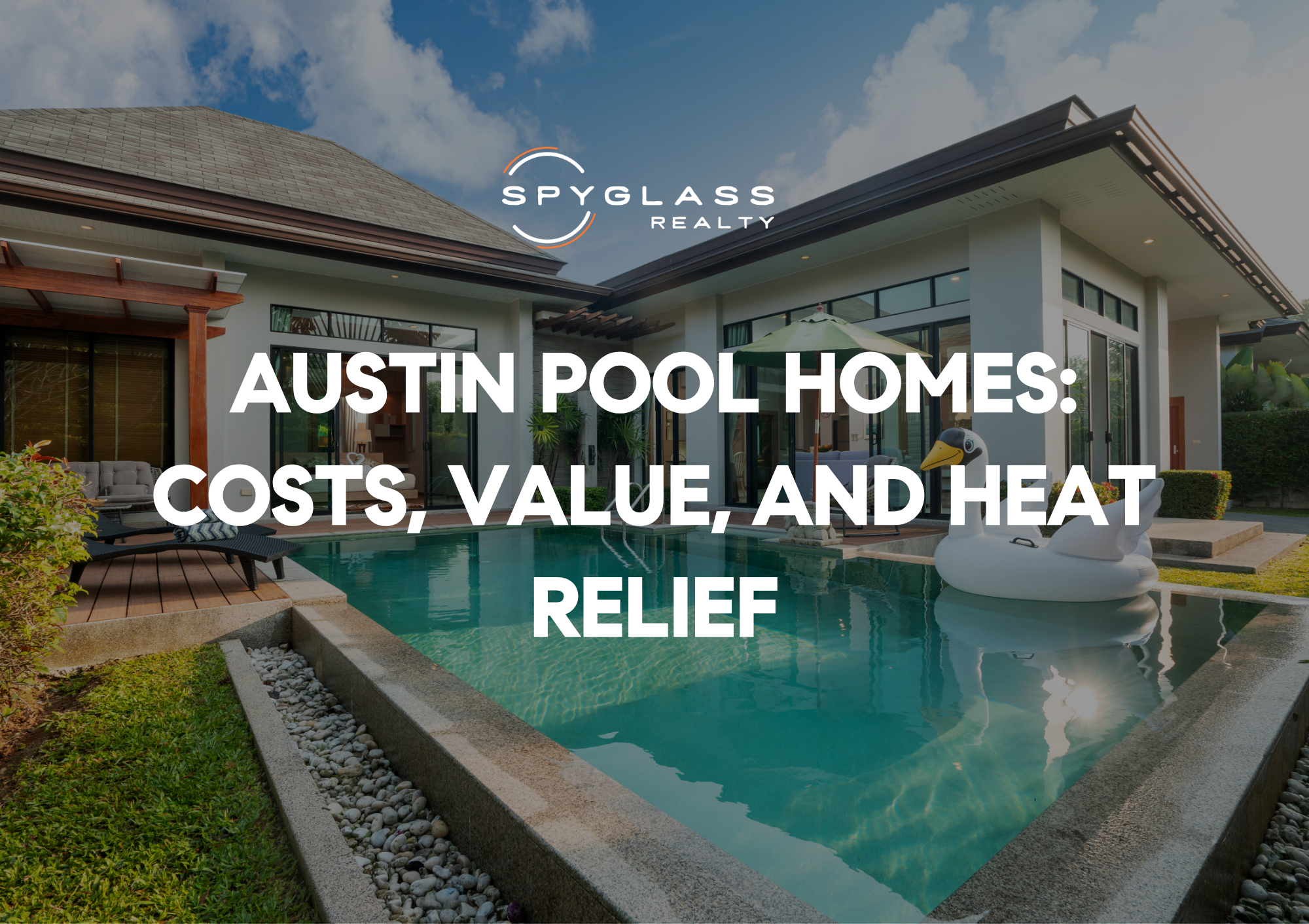
Beating the Texas Heat is a real, year-after-year consideration for Austin home buyers, and it increasingly shapes which properties get the most attention each summer. When the region settles into long runs of days at or above 100 degrees Fahrenheit, as documented by the National Weather Service in Austin and San Antonio, a backyard that offers relief becomes more than a luxury. Pools, covered patios, mature shade trees, and water-wise landscaping move from nice-to-have to a genuine part of how families plan their daily lives.
At the same time, outdoor features carry tradeoffs in cost, maintenance, and resale appeal that are easy to overlook during a hot afternoon showing. A sparkling pool feels essential in July, but it asks for attention in every season.
This guide walks through what pool ownership actually involves in Central Texas, how shaded and climate-resilient yards compare, and how buyers and sellers can weigh these features with clear eyes. The goal is simple: help you decide whether a pool home fits the way you want to live in Austin.
Why Beating the Texas Heat Shapes What Austin Buyers Want
Beating the Texas Heat shapes buyer demand because Central Texas summers are long, intense, and increasingly part of the home-search conversation. When temperatures sit above 100 degrees for days at a time, as the National Weather Service regularly records for the Austin area, outdoor comfort directly affects how usable a property feels.
The lifestyle factor
For many Austin families, a pool is about how they spend weekends from May through September. It becomes the gathering spot for kids, neighbors, and cookouts, and it can keep people home instead of driving to a crowded public pool or lake. If you already love hosting, pairing a pool with good outdoor cooking can extend the season, and our grilling tips to wrap up summer pair naturally with a backyard built for entertaining.
Who values outdoor features most
Buyers with young children, remote workers who want a usable yard, and entertainers tend to prioritize outdoor living. Households relocating from cooler climates are sometimes surprised by how central shade and water become to daily comfort in Austin.
Location still leads the decision
Even with heat in mind, neighborhood and commute usually outrank a pool for most buyers. A pool home in a community that fits your budget and lifestyle matters more than a pool in the wrong location. If you are still narrowing down where to settle, our overview of the best suburbs of Austin by lifestyle and budget can help you frame the search before you fall for a backyard.
What a Pool Really Costs to Own in Central Texas
Owning a pool in Central Texas costs more than the upfront price reflected in the home. You should plan for ongoing expenses tied to chemicals, electricity, equipment, repairs, and seasonal service, all of which vary with pool size, type, and how often you use it.
Recurring maintenance and utilities
Most pool owners face regular spending on water balancing, cleaning, and running the pump and filter. In a region with long swim seasons and hot, dry stretches, evaporation and chemical demand can climb during peak summer.
- Chemicals and water: chlorine or saltwater systems, plus topping off water lost to evaporation during hot, dry months.
- Energy: running a pump and filter, and any heater or automation, which adds to summer electricity bills.
- Service: either your own time each week or a recurring fee for a professional pool service.
- Repairs and replacement: pumps, filters, heaters, and surfaces wear out over time and eventually need replacing.
Insurance, safety, and compliance
A pool can affect homeowners insurance and may prompt requirements for fencing or barriers, especially with young children present. Many Austin-area jurisdictions and neighborhoods have safety rules around pool enclosures, so verifying local requirements is part of responsible ownership. Talk with your insurer and a local agent so there are no surprises after closing.
Why a separate pool inspection matters
A standard home inspection often gives only a surface-level look at a pool. Hiring a dedicated pool inspector to evaluate the equipment, plumbing, surface, and structure can reveal costly issues before you commit. If a repair surprise affects the home's value, understanding how to question a number is useful, and our guide on how to contest a home appraisal in Austin covers the broader principle of pushing back with evidence.
Beyond the Pool: Shaded, Climate-Resilient Backyards
A pool is not the only way to make a backyard livable in Austin summers. Shade structures, mature trees, covered patios, and water-wise landscaping can deliver real heat relief, often at a lower long-term cost than a pool.
Shade and covered outdoor living
Covered patios, pergolas, and large shade trees can drop the perceived temperature of an outdoor space dramatically. A shaded patio with ceiling fans can stay usable on afternoons when a sun-baked deck is unbearable. For buyers, mature trees on a lot are a feature that is impossible to add quickly, so they carry lasting value.
Native and drought-tolerant landscaping
Central Texas native plants and xeriscaping handle heat and water restrictions better than thirsty turf grass. Drought-tolerant beds reduce both your water bill and the upkeep that fades quickly in August. Many of these choices overlap with broader efficiency upgrades, and our roundup of eco-friendly home upgrades shows how outdoor and indoor savings can work together.
Smaller water features and alternatives
Not everyone needs a full in-ground pool to enjoy the water. Stock-tank pools, plunge pools, and splash pads offer cooling on a smaller footprint and budget. Proximity to swimming holes also matters, and Hill Country communities like Dripping Springs and lakeside areas such as Lakeway put natural water within easy reach, which can reduce the pressure to build your own pool.
Do Pool Homes Add Value in Austin?
A pool can add value in Austin, but the effect depends heavily on neighborhood, price point, and condition rather than the pool alone. In some communities a pool is expected and helps a home compete, while in others it appeals to a narrower set of buyers.
Where pools tend to help most
In higher-end and luxury submarkets, a well-maintained pool often aligns with buyer expectations. Areas like Westlake and Bee Cave attract buyers who frequently look for resort-style outdoor living. In family-oriented suburbs such as Cedar Park and Leander, a pool can be a differentiator on a competitive street.
When a pool can narrow your buyer pool
Some buyers actively avoid pools because of maintenance, safety concerns with small children, or simple preference for more yard. An aging pool that needs resurfacing or new equipment can become a negotiating point that works against a seller. The condition of the pool, not just its presence, often drives whether it adds or subtracts from perceived value.
Letting data guide the decision
Comparing recent sales of similar pool and non-pool homes in a specific neighborhood is more reliable than any rule of thumb. A local agent can pull those comparisons so you price expectations realistically. For a sense of how modern tools sharpen these estimates, our explainer on big data in real estate shows how analysis informs smarter pricing.
How Sellers Can Make a Pool or Backyard Stand Out
Sellers get the most from a pool or backyard by presenting it as turnkey, documented, and easy to maintain. Buyers price uncertainty into their offers, so clear records and clean presentation reduce hesitation.
Document age, equipment, and upkeep
Provide the age of the pool, the age and brand of the pump, filter, and any heater, plus a record of recent service. When buyers can see that a pool has been cared for, they worry less about inheriting deferred maintenance. Transparency tends to protect your price during negotiation.
Stage the outdoor space for summer showings
Clean water, tidy decking, comfortable seating, and shade make a backyard feel like an extension of the living space. Simple touches, such as a set table or a shaded lounge area, help buyers picture their own summers there. Highlighting nearby attractions can reinforce the lifestyle, and our list of things to do in Austin before summer ends reflects how outdoor living anchors the season here.
Address safety and efficiency upfront
A compliant fence, working safety features, and energy-efficient equipment reassure cautious buyers and may ease insurance concerns. If you have upgraded to a variable-speed pump or added shade, mention it, since efficiency lowers ongoing costs. These details turn a potential objection into a selling point.
Frequently Asked Questions
Are pool homes worth it in Austin, Texas?
A pool home can be worth it in Austin if you will use the pool regularly and you budget for ongoing maintenance, energy, and eventual repairs. With long stretches of 100-degree days documented by the National Weather Service, a pool earns its keep for families who entertain and swim through the long summer. The value question ultimately comes down to your lifestyle and your willingness to maintain it. In luxury submarkets like Westlake, a quality pool often aligns with what buyers already expect.
Does a swimming pool increase home value in Austin?
A swimming pool can increase home value in Austin, but the impact depends on the neighborhood, price point, and the pool's condition rather than its mere presence. In communities where pools are common, a well-kept pool helps a home compete, while an aging pool may become a repair negotiation. The most reliable way to gauge the effect is to compare recent sales of similar pool and non-pool homes in your specific area. A local Spyglass agent can pull those comparisons for neighborhoods like Cedar Park or Bee Cave.
How much does it cost to maintain a pool in Central Texas?
Maintaining a pool in Central Texas involves recurring costs for chemicals, water, electricity to run the pump and filter, and either your own time or a professional service fee. Hot, dry summers increase evaporation and chemical demand, and equipment such as pumps and heaters eventually needs replacing. Because costs vary with pool size and usage, ask the seller for recent service and utility records. Throughout the Austin metro, a dedicated pool inspection before closing helps you anticipate these expenses.
What backyard features help beat the heat without a pool in Austin?
Covered patios, pergolas, mature shade trees, ceiling fans, and native drought-tolerant landscaping all help beat the heat without the cost of a pool. Smaller options like stock-tank pools, plunge pools, and splash pads provide cooling on a tighter budget and footprint. These features often cost less to maintain than an in-ground pool while still making the yard usable. In Hill Country areas like Dripping Springs and lakeside Lakeway, easy access to natural swimming can further reduce the need to build your own pool.
The Bottom Line for Austin Buyers and Sellers
Beating the Texas Heat is a practical goal that should inform, but not dominate, your home decision. A pool can transform summer life if you will use it and maintain it, while shaded, climate-resilient backyards offer heat relief with fewer ongoing demands. The right choice depends on how you live, your budget, and the neighborhood you choose.
For sellers, transparency and presentation turn an outdoor feature into an advantage rather than a question mark. For buyers, a dedicated inspection and a clear cost picture protect you from surprises after the keys change hands.
Whether you want a resort-style backyard or a low-maintenance shaded retreat, a local advisor can help you compare real options across the Austin metro and price them realistically.
Ready to talk through whether a pool home or a shaded backyard fits your Austin lifestyle and budget?
Talk to a Spyglass AgentDisclaimer: This article is for general educational purposes only and is not legal, tax, or financial advice. Every situation is different. Before making decisions about buying or selling a home, consult with your own real estate professional, lender, tax advisor, and other qualified professionals.