
Key Insights
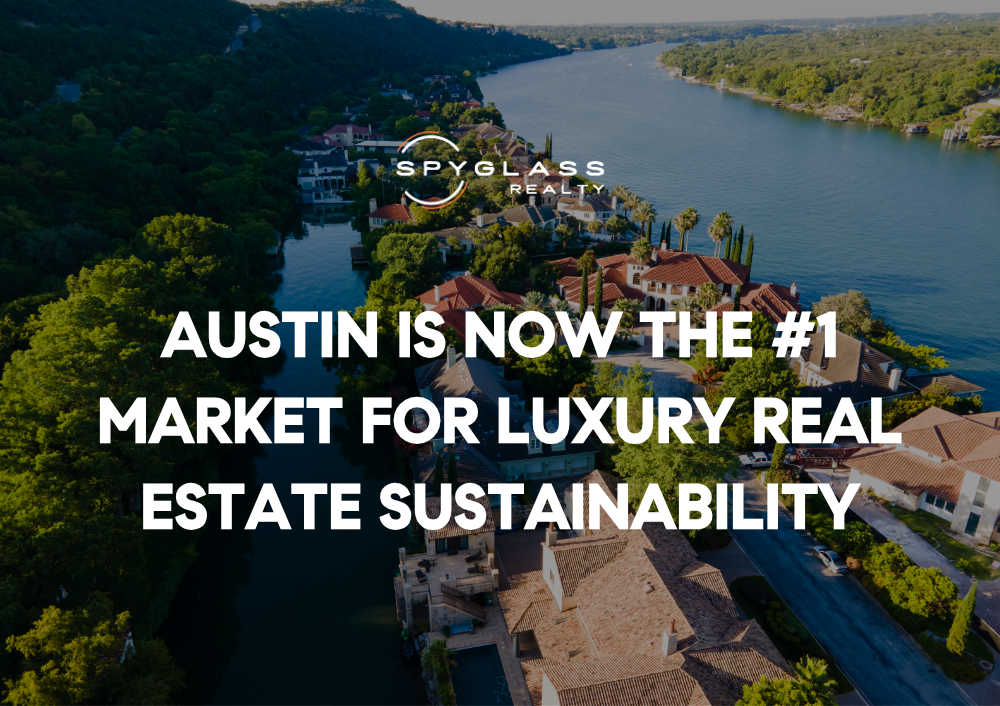
- Austin is now the #1 market for luxury real estate sustainability in 2026, ranked by the National Law Review for pricing stability, market balance, and durable long-term demand.
- Sustainability here means market resilience, not just green building. It measures whether a luxury home holds value across full economic cycles rather than one hot year.
- Balanced inventory gives luxury buyers negotiating room on price, terms, closing timelines, and repairs that were far harder to find during the frenzied pandemic run-up.
- Diversified demand from technology, healthcare, and relocation buyers supports a broader base of purchasers than markets that lean on a single industry or seasonal tourism.
- Energy-efficient features, verified by programs like ENERGY STAR and LEED, increasingly influence luxury resale value and long-term carrying costs in Central Texas.
- Westlake, Tarrytown, Lakeway, and Bee Cave anchor Austin's luxury tier, each offering different mixes of acreage, lake access, and proximity to the urban core.
Austin is now the #1 market for luxury real estate sustainability, according to a 2026 analysis published by the National Law Review, which ranked leading U.S. metros on pricing stability, market balance, and long-term demand rather than short-term price spikes. That distinction matters, because sustainability in this context is about durability, whether a high-end home is likely to hold its value across a full economic cycle instead of one heated season.
For luxury buyers and investors, a top ranking for sustainability signals something more useful than a headline about record prices. It suggests the market has the fundamentals, diversified demand, healthier inventory, and steady in-migration, that support confident long-term ownership.
Below, we break down exactly what the sustainability metrics mean for your purchase decision, how they play out across Austin's premier neighborhoods, and where to look for durable value.
Why Austin Is Now the #1 Market for Luxury Real Estate Sustainability
Austin earned the top ranking because its luxury market scores well on the three factors that predict lasting value: pricing stability, supply and demand balance, and durable long-term demand. Rather than rewarding the fastest price growth, the sustainability framework rewards markets least likely to overshoot and correct.
Pricing stability over price spikes
Pricing stability measures how smoothly values move rather than how high they jump. A market that rises gradually and holds through slower periods is considered more sustainable than one that doubles quickly and gives it back. Austin's luxury tier, after cooling from its pandemic-era peak, has settled into a steadier pattern that the National Law Review analysis treats as a strength, not a weakness.
Market balance and healthier inventory
Balance refers to the relationship between available homes and active buyers. When inventory rebuilds toward normal levels, buyers regain leverage and sellers price more realistically, which reduces the risk of the runaway bidding that leaves buyers overexposed. Austin's luxury inventory has widened meaningfully from the razor-thin supply of a few years ago, giving qualified buyers room to negotiate.
Durable, diversified long-term demand
Long-term demand asks whether buyers will keep arriving after the current cycle ends. Austin's demand base spans technology, healthcare, higher education, and continued relocation from higher-cost states, so it does not rest on a single employer or industry. That diversity is a core reason the metro ranks first for sustainability, and it is worth understanding alongside the broader picture in our guide to relocating to Austin.
What Sustainability Metrics Mean for Your Purchase Decision
For a luxury buyer, a sustainability ranking translates into practical negotiating power and lower downside risk. It tells you the market is less likely to strand you at a peak and more likely to reward patient, well-researched buying.
Negotiating room you likely did not have before
In a balanced luxury market, you can often negotiate on more than headline price. Terms, closing timelines, repair credits, and contingencies come back onto the table when sellers face longer marketing periods. That leverage is one of the clearest day-to-day benefits of buying in a market ranked for balance rather than scarcity.
Underwriting for the full cycle, not the moment
Sustainability metrics encourage you to evaluate a home the way an investor would, on its likely value in five to ten years rather than this quarter. Ask how a property would perform if the pace slowed: is the location irreplaceable, is the lot desirable, and is the demand base broad? Data-driven analysis increasingly guides these decisions, a theme we explore in our overview of big data in real estate.
What to prioritize in a sustainable luxury purchase
- Location durability Prioritize established or supply-constrained areas where land cannot be easily replicated, such as lakefront or close-in acreage.
- Realistic pricing Compare recent closed sales, not aspirational list prices, so you enter at a defensible basis.
- Carrying costs Factor property taxes, insurance, and energy use into your long-term math, not just the purchase price.
- Exit flexibility Favor homes with broad appeal so your future buyer pool stays large across market conditions.
Where Luxury Sustainability Shows Up Across Austin Neighborhoods
Sustainability is not evenly distributed across the metro. The most durable luxury value tends to concentrate in established, supply-constrained neighborhoods where land is scarce and demand is deep.
The close-in luxury core
Neighborhoods like Westlake and Tarrytown anchor Austin's luxury tier because they combine top-rated schools, mature tree canopy, and limited buildable land close to downtown. That scarcity supports pricing stability, since new supply cannot easily flood these pockets. For buyers focused on durability, proximity to the urban core plus constrained inventory is a powerful combination.
Lake and Hill Country luxury
West of the city, Lakeway and Bee Cave offer lake access, larger lots, and Hill Country views that appeal to a distinct set of luxury buyers. Dripping Springs extends that appeal with acreage and privacy. These areas draw demand from buyers who want space and natural amenities, broadening the overall buyer base that supports the market.
Emerging and urban luxury pockets
Closer in, areas such as South Congress and revitalized parts of East Austin have added high-end product with strong walkability and cultural draw. If you are weighing lifestyle fit across price points, our breakdown of the best suburbs of Austin and our guide to living in East Austin can help you compare neighborhoods before you tour.
How Green Features Factor Into Luxury Sustainability
While the ranking centers on market sustainability, environmental sustainability increasingly overlaps with long-term luxury value. Energy-efficient, well-built homes tend to carry lower operating costs and appeal to a growing share of high-end buyers.
Verified efficiency and certifications
Certifications provide independent proof of a home's efficiency, which can support resale value. Programs such as ENERGY STAR and LEED set measurable standards for energy and building performance. In a hot Central Texas climate, features like high-performance windows, efficient HVAC, and quality insulation meaningfully lower cooling costs over years of ownership.
New construction and modern systems
Newer luxury homes often integrate solar readiness, smart climate systems, and durable materials that reduce maintenance. If you are evaluating recently built inventory, our guide to Austin new construction walks through what to verify before you commit. Prioritizing verified efficiency protects both your monthly costs and your future buyer pool.
Everyday value beyond the utility bill
Sustainable features also support comfort, indoor air quality, and resilience during extreme weather, all of which matter in Texas. Thoughtful landscaping and exterior upkeep add durable appeal as well, a topic covered in our tips on improving curb appeal. Together, these elements reinforce the long-term value that the sustainability framework rewards.
What the Ranking Means for Investors
For investors, a #1 sustainability ranking signals lower volatility and a deeper long-term demand base, which supports both appreciation potential and rental durability. It rewards a buy-and-hold mindset over speculative flipping.
Lower volatility, steadier returns
Markets that avoid extreme boom and bust cycles tend to produce more predictable returns over time. Pricing stability reduces the risk of buying at a peak and being forced to sell into a trough. That predictability is often more valuable to a long-term investor than the promise of rapid, unstable gains.
Diversified demand supports rentals and resale
A broad demand base from multiple industries and continued relocation helps keep both rental occupancy and resale liquidity healthy. Suburban markets like Cedar Park, Round Rock, Leander, and Georgetown extend that demand outward with employment growth and family-oriented amenities. For a fuller framework, see our complete guide to investing in Austin real estate.
Aligning strategy with sustainability
If your goal is durable value, favor assets and locations that would remain desirable in a slower market. Continued business formation across the metro strengthens the case, as detailed in our look at new business opportunities in Austin. Matching your holding period and financing to the market's steadier rhythm is the most direct way to benefit from a sustainability-led environment.
Frequently Asked Questions
What does luxury real estate sustainability actually mean?
In this context, luxury real estate sustainability measures how durable a market's value is over time, judged by pricing stability, supply and demand balance, and long-term demand rather than short-term price jumps. It is about resilience across a full economic cycle. The 2026 National Law Review analysis used these metrics to rank Austin first among U.S. luxury markets, reflecting the depth and diversity of Central Texas demand.
Is Austin a good place to buy a luxury home in 2026?
For buyers focused on long-term value, Austin's #1 sustainability ranking is a strong signal, because it points to steadier pricing and healthier inventory rather than a scarcity-driven frenzy. A more balanced market gives you negotiating room on price and terms. Established areas like Westlake, Tarrytown, and Lakeway tend to offer the most durable value within the metro.
Do energy-efficient features increase a luxury home's value in Austin?
Verified energy efficiency can support resale value and lower long-term carrying costs, which matters in Austin's hot climate where cooling expenses are significant. Certifications through programs like ENERGY STAR and LEED provide independent proof of performance that appeals to a growing share of high-end buyers. In Central Texas, high-performance windows, efficient HVAC, and quality insulation are especially valuable over years of ownership.
Which Austin neighborhoods offer the most durable luxury value?
Supply-constrained, established neighborhoods tend to hold luxury value best because their land cannot be easily replicated. Westlake and Tarrytown lead the close-in core, while Lakeway, Bee Cave, and Dripping Springs anchor lake and Hill Country luxury. Each draws a different buyer base, which broadens overall demand and supports the metro's top sustainability ranking.
The Bottom Line for Austin Luxury Buyers and Investors
Austin's status as the #1 market for luxury real estate sustainability is less about bragging rights and more about a practical roadmap for confident buying. Pricing stability, market balance, and diversified long-term demand all point toward durable value that rewards patient, well-researched decisions.
The takeaway for you is to underwrite for the full cycle, prioritize supply-constrained locations, and weigh verified efficiency alongside price. Those habits align your purchase with the same fundamentals that earned the metro its ranking.
Whether you are buying a primary residence or building a portfolio, a local advisor can help you translate these sustainability metrics into a specific neighborhood and property strategy.
Want to explore durable luxury value in Austin's top neighborhoods? Talk through your options with a local expert.
Talk to a Spyglass AgentDisclaimer: This article is for general educational purposes only and is not legal, tax, or financial advice. Every situation is different. Before making decisions about buying or selling a home, consult with your own real estate professional, lender, tax advisor, and other qualified professionals.