
Key Insights
- A February 2026 report shows Austin is growing roughly 2.5 times faster than the U.S. overall, directly challenging the popular narrative that the metro is in decline.
- Austin added about 51% more households than the national average over the same measurement period, signaling continued demand for housing across the region.
- Household growth, not just headline population counts, is the number that drives real housing demand because each new household needs a place to live.
- For buyers, sustained growth supports long-term value, while a more balanced 2025 to 2026 market means more inventory and more negotiating room than the frenzy years.
- Investors should watch fast-growing suburbs like Leander, Georgetown, Kyle, and Buda, where household formation and new construction are concentrated.
- Slower price appreciation does not equal population decline. The two are separate trends, and Austin's growth rate remains well above the national baseline.
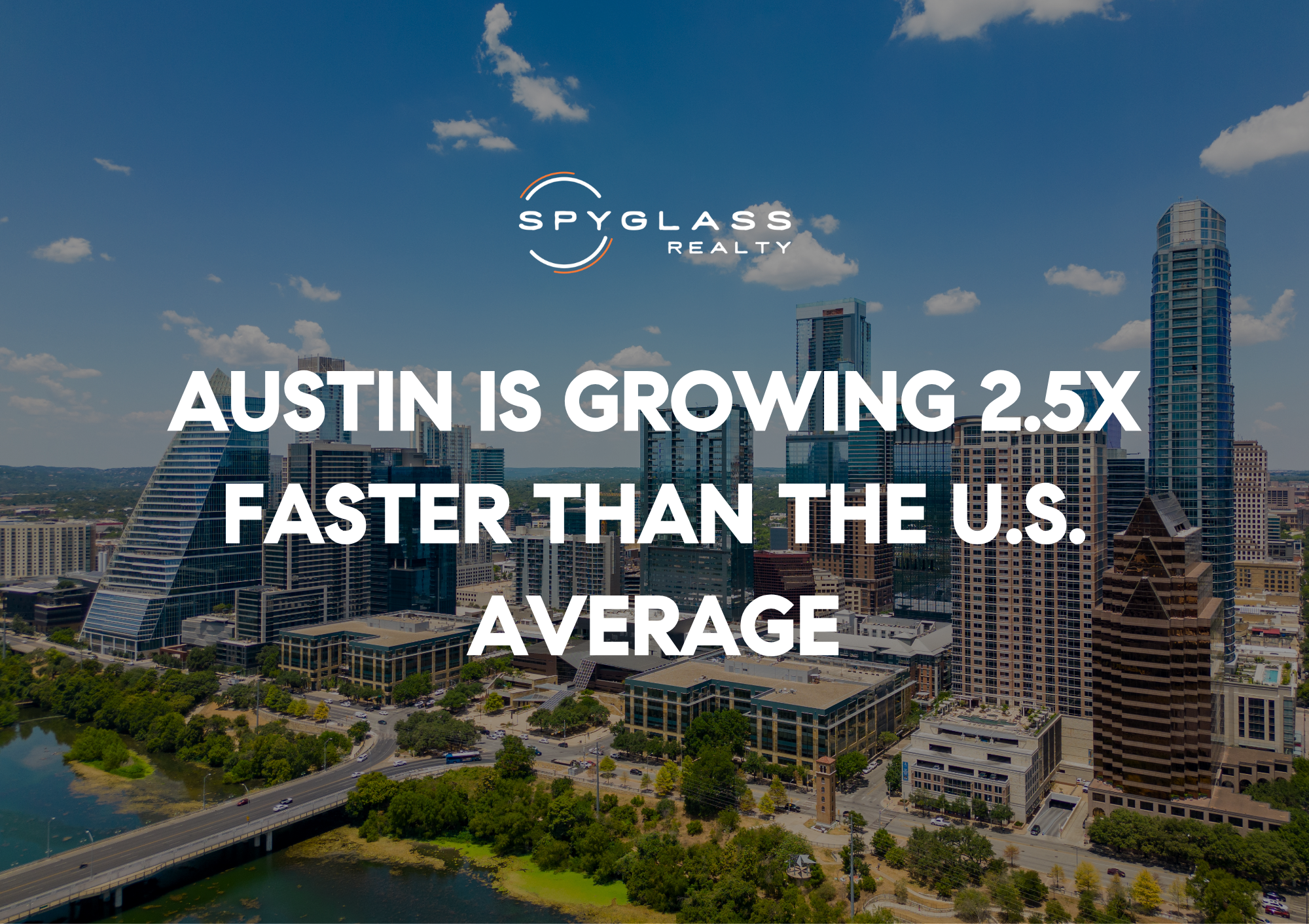
Despite a steady drumbeat of headlines suggesting the region has peaked, the data tells a different story: Austin is growing 2.5x faster than the U.S. average, according to a February 2026 report on metro household trends. That same report found Austin added roughly 51% more households than the national pace over the same period. In other words, the city many people describe as cooling is still expanding far faster than the country as a whole.
It is easy to confuse two different things. Home price appreciation has slowed and inventory has risen across Central Texas, which is real and meaningful for buyers and sellers. But the number of people and households choosing to live here has kept climbing at a rate most American cities would envy.
This post reframes the "Austin is declining" story with concrete numbers, then translates what continued growth means for you whether you are buying, selling, or investing across the metro from Round Rock to Dripping Springs.
What does "Austin is growing 2.5x faster than the U.S. average" actually mean?
It means that over the period measured in a February 2026 report, the Austin metro added new households at roughly two and a half times the rate of the United States overall. Growth is measured as a percentage change, so a fast growth rate on a large existing base still represents a substantial number of new residents.
Growth rate versus raw numbers
When a report says Austin grew 2.5 times faster than the national average, it is comparing percentage rates, not raw headcounts. The national average is the baseline, and Austin sits well above it. The same report noted Austin added about 51% more households than the national pace, which underscores that the gap is wide, not marginal.
Why households matter more than population
Household formation is the metric that drives housing demand, because every new household needs a roof, whether that is a rental, a condo, or a single-family home. The U.S. Census Bureau tracks Austin as one of the fastest-growing large metros in the country, a position it has held for years according to Census Bureau population data for Austin. Strong household growth means demand has a durable floor even when prices flatten.
If you want the human side of why people keep arriving, our breakdown of why everyone is moving to Austin walks through the jobs, climate, and lifestyle drivers behind the numbers.
Why does the "Austin is declining" narrative exist?
The decline narrative exists because two real trends got blended into one story: home prices stopped rising as fast, and the rate of growth slowed from the extraordinary pandemic-era surge. Neither of those means the population is shrinking. Austin is simply growing at a more sustainable pace than it did at the peak.
Cooling prices are not the same as cooling growth
Home prices and population growth are separate measurements. Prices respond to supply, interest rates, and affordability, while population responds to jobs, migration, and quality of life. Austin built a lot of new housing in recent years, and that added supply is part of why prices softened even as people kept moving in.
The base-rate illusion
When a metro grows extremely fast, any return toward normal feels like a crash by comparison. A move from a historic peak growth rate down to a still-elevated rate gets reported as a slowdown, even when Austin remains far ahead of the national average. Context matters, and the February 2026 report supplies it by anchoring Austin's pace to the U.S. baseline.
- Slower appreciation Prices rose more gradually, which helps buyers but reads as bad news in headlines.
- More inventory New construction and longer days on market gave buyers options the frenzy years lacked.
- Continued in-migration Households kept forming at roughly 2.5 times the national rate, per the February 2026 report.
What does Austin's growth mean for buyers?
For buyers, sustained population growth supports long-term home value, while a more balanced market gives you negotiating room you did not have during the boom. You get the best of both: a region with durable demand and a market where you can take your time, inspect carefully, and negotiate terms.
More leverage than the boom years
When inventory is higher and homes sit longer, you can request repairs, ask for closing-cost help, and avoid waiving contingencies. That is a meaningful shift from the period when buyers competed in multiple-offer situations. A local agent can help you read each neighborhood's specific conditions, since the metro is not uniform.
Where growth is concentrated
A large share of new households is settling in the suburbs where land and new construction are more available. Communities like Leander, Georgetown, Kyle, and Buda have absorbed much of the region's expansion. If you are weighing a suburb, our guide to whether Leander is a good place to live is a useful starting point.
Buy versus build
With builders active across the metro, buying new is a real option, not just a fallback. If you want to weigh fresh construction against resale, our overview of the reasons to build a home in Austin lays out the trade-offs. Either path benefits from a market where you are not forced to rush.
What does it mean for sellers and investors?
For sellers, the steady stream of new households means there is a real buyer pool, but pricing to current conditions matters more than it did during the surge. For investors, growing household formation supports rental demand and long-term appreciation, especially in the suburbs absorbing the most newcomers.
Sellers: price to today, not to 2021
With more inventory on the market, buyers compare options carefully, so accurate pricing and strong presentation win. The good news is that demand has not disappeared. Austin is growing 2.5x faster than the U.S. average, which means qualified buyers continue to enter the market every month, but they expect fair pricing and move-in-ready condition.
Investors: follow the household formation
New households need housing, and many of them rent before buying, which sustains rental demand in growth corridors. Submarkets seeing the most household growth, including parts of Pflugerville, Cedar Park, and Georgetown, deserve attention. Investors who use data-driven analysis of local markets can identify where demand and supply are most favorable.
Both groups benefit from the long view
Real estate rewards patience in a growing market. Because Austin continues to expand well above the national rate, the fundamentals that have supported the region's housing for two decades remain intact. The Census Bureau's long-running data confirms Austin's status as a top-growth metro, which is the backdrop against which both sellers and investors should plan.
How fast is Austin really growing compared to the nation?
Austin is growing roughly 2.5 times faster than the United States overall, and it added about 51% more households than the national average over the same period, according to a February 2026 report. That positions Austin firmly among the fastest-growing large metros in the country.
Reading the comparison correctly
The figures above come from the February 2026 report and align with the broader picture in U.S. Census Bureau data for Austin, which has shown Austin near the top of large-metro growth rankings for years.
Why the gap persists
Jobs, relative affordability versus coastal cities, and lifestyle continue to pull people to Central Texas. Many newcomers work remotely or in tech, healthcare, and manufacturing roles concentrated in the region. If you are settling in with a flexible job, our tips on staying productive while working from home may help you choose a layout and neighborhood that fit.
Frequently asked questions
Is Austin really growing or is it declining in 2026?
Austin is still growing, not declining. A February 2026 report found the metro is expanding roughly 2.5 times faster than the U.S. average and added about 51% more households than the national pace. The confusion comes from slower home-price appreciation, which is a separate trend from population. Across the Austin service area, from Round Rock to Dripping Springs, household demand remains well above the national baseline.
How much faster is Austin growing than the U.S. average?
Austin is growing about 2.5 times faster than the United States overall, according to a February 2026 report on metro household trends. The same report noted Austin added roughly 51% more households than the national average over the same period. The U.S. Census Bureau has long ranked Austin among the fastest-growing large metros, which supports this figure. Suburbs like Leander and Georgetown are absorbing much of that growth.
Does slower home price growth mean Austin is a bad place to buy?
No. Slower price growth often benefits buyers because it comes with more inventory, longer decision windows, and more negotiating room. With Austin still adding households faster than the national average, long-term demand fundamentals remain strong. For buyers in communities like Cedar Park, Kyle, and Buda, a balanced market can be a favorable entry point rather than a warning sign.
Where in the Austin metro is most of the growth happening?
Much of Austin's household growth is concentrated in suburban areas with available land and active new construction, including Leander, Georgetown, Pflugerville, Kyle, and Buda. These corridors offer newer housing stock and relative affordability compared to the urban core. Investors and buyers tracking household formation should focus on these growth corridors, where rental demand and resale potential are reinforced by ongoing in-migration across the Austin service area.
The bottom line
The headlines about a cooling Austin describe slower price appreciation, not a shrinking city. A February 2026 report makes the distinction clear: Austin is growing 2.5x faster than the U.S. average and added about 51% more households than the national pace. That combination of durable demand and a more balanced market is unusual and worth understanding.
For buyers, it means leverage and long-term value. For sellers, it means real demand paired with the need for accurate pricing. For investors, it means following household formation into the growth corridors. Whatever your goal, the right move starts with reading your specific neighborhood, not the national headline.
Want to understand what Austin's growth means for your specific buying, selling, or investing plans? Let's talk through your options.
Talk to a Spyglass AgentDisclaimer: This article is for general educational purposes only and is not legal, tax, or financial advice. Every situation is different. Before making decisions about buying or selling a home, consult with your own real estate professional, lender, tax advisor, and other qualified professionals.