Key Insights
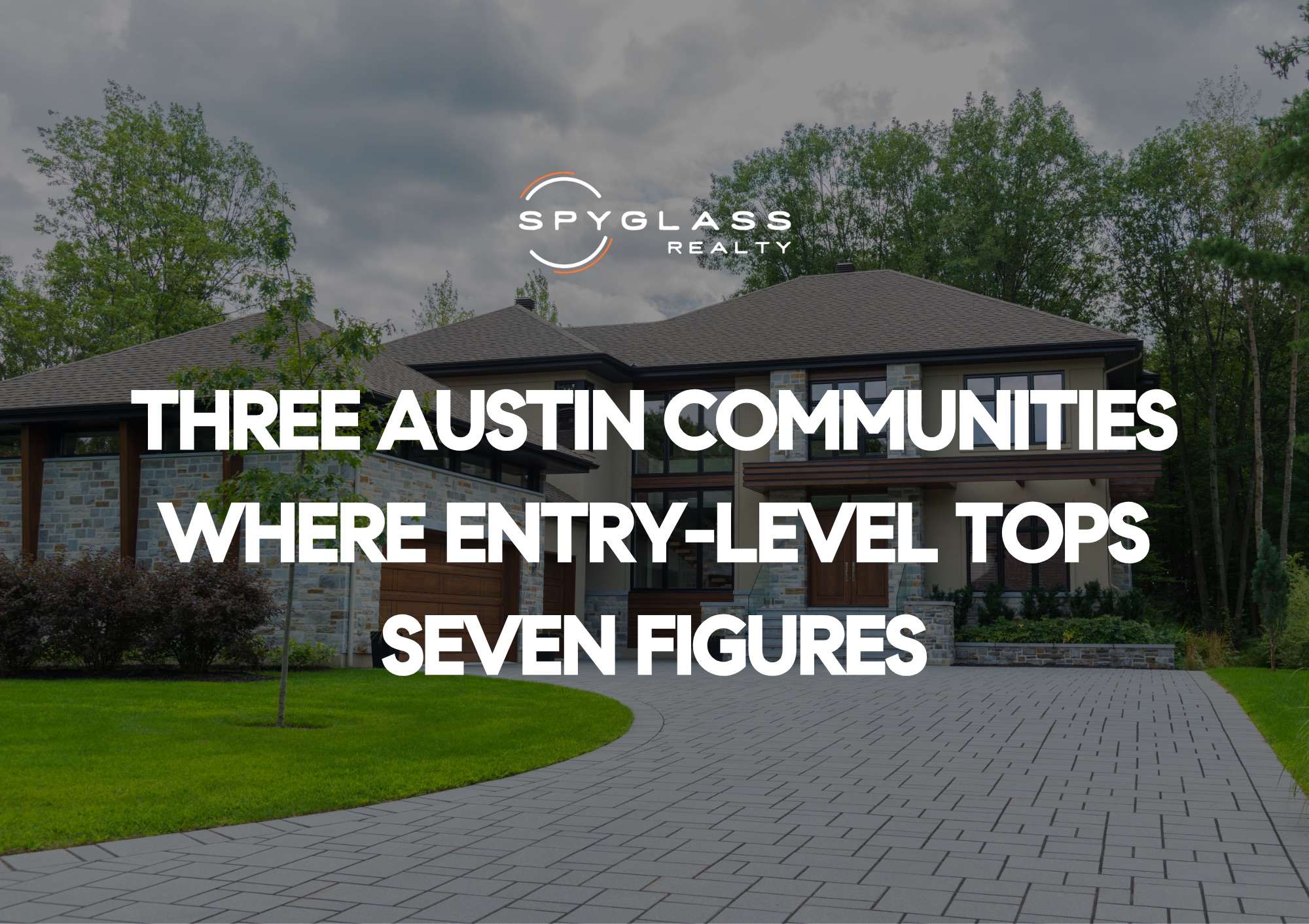
- Three communities in the Austin metro had a typical starter home priced at $1 million or more as of April, according to new market data shared with Axios.
- Nationally, 242 U.S. cities now have starter homes worth $1 million or more, an all-time high that has tripled since 2020.
- A starter home is defined as a home in the lowest third of home values in a given region, not a specific size, age, or style.
- Recent Austin-area luxury reports place the national 90th-percentile luxury threshold near $1.28 million, so some Austin starter homes now brush against luxury pricing.
- Today's first-time buyers expect to stay roughly 15 years, shifting demand from urban condos toward larger suburban houses they can grow into.
- Seven-figure starter homes now span 26 states, with California leading, proving the trend is no longer confined to the coasts.
When a starter home costs $1 million in Austin, the phrase "entry level" stops meaning what it used to. New local market data shared with Axios in July 2026 found three communities in the Austin metro where the typical starter home now costs $1 million or more, as of April. For buyers and investors targeting the bottom rung of the market, that is a budget-defining number.
This is not just an Austin story. It reflects a nationwide shift in which the least expensive third of homes in some cities has climbed into territory much of the country would call luxury. Understanding where and why that has happened locally helps you set realistic expectations before you tour a single property.
Below, we break down what a $1 million starter home actually means, why prices have climbed this far, where seven-figure entry pricing shows up around the metro, and what it means for buyers, sellers, and investors.
What it means when a starter home costs $1 million in Austin
A $1 million starter home does not mean a $1 million mansion. It means the least expensive third of homes in a given community has a typical value at or above seven figures, so even the cheapest realistic entry point crosses that line.
How a starter home is defined
The definition matters more than most buyers realize. As reported by Marketplace in June 2026, a starter home is measured as a home in the lowest third of home values in a given region. That is a relative measure, not a fixed square footage or a specific vintage. In a high-value community, the bottom third can still carry a seven-figure price tag.
Three Austin-metro communities crossed the line
The July 2026 data identified three Austin-area communities where the typical starter home reached $1 million or more as of April. These are pockets where land, schools, and location have pushed the entire value distribution upward, so even the most modest homes clear seven figures. For context, recent Austin-area luxury market reports place the national 90th-percentile luxury threshold near $1.28 million, meaning some of these "starter" homes now sit within reach of what much of the country considers luxury.
If you want to understand how the top of the market frames the bottom, our overview of the Austin luxury real estate market and $1M-plus homes puts these numbers in perspective.
Why starter home prices climbed into seven figures
Starter home prices climbed into seven figures because of a combination of limited supply, sustained demand, and buyers who now hold homes far longer than they once did. The result is upward pressure on the least expensive tier that outpaces the broader market.
A national shift, not just Austin
Austin is part of a much larger pattern. According to reporting from Money in 2026, starter homes now cost at least $1 million in 242 U.S. cities. As Planetizen noted in June 2026, these cities are now spread across 26 states, no longer concentrated only on the coasts. The trend has reached inland metros like Austin because job growth, migration, and constrained new supply have compounded over several years.
The count has tripled since 2020
The pace of change is striking. National reporting summarized by AOL in 2026 found the number of cities with $1 million starter homes has tripled since 2020, with California leading the country. That kind of expansion signals a structural change in affordability, not a short-term spike. For Austin, it means the entry-level conversation looks nothing like it did five years ago.
Buyers are staying put longer
Behavior has changed alongside price. Marketplace reported that a typical first-time buyer now expects to live in a starter home for about 15 years, which pushes demand away from small urban condos and toward larger suburban houses. When buyers treat a first home as a long-term home, they compete for bigger properties, and that competition lifts prices at the bottom of the market. Fewer people trading up also means fewer entry-level listings freeing up.
Where seven-figure entry pricing shows up in the Austin metro
Seven-figure entry pricing concentrates in the Austin metro's close-in west side and its lakefront western suburbs, where limited land and top-rated schools raise the entire price distribution. In these areas, even the least expensive homes tend to clear $1 million.
Close-in west-side neighborhoods
The neighborhoods closest to downtown on the west side carry some of the highest entry prices in the region. Areas like Westlake and Tarrytown combine short commutes, mature tree canopy, and highly sought-after schools, which lifts the price of even modest homes. Our guide to the most expensive neighborhoods in Austin and where to buy luxury explains how these areas set the metro's pricing ceiling.
Lake Travis and the western suburbs
West of the city, the Lake Travis corridor pushes prices up through water access, views, and gated developments. Communities such as Lakeway and Bee Cave draw buyers who want space and amenities, and that demand keeps entry prices high. Waterfront supply is especially constrained, as our overview of Lake Austin waterfront homes details.
Where more entry-level inventory still exists
Not every part of the metro has crossed into seven-figure starter territory. Growing suburbs to the north and south still offer more attainable entry points relative to the west side. If a $1 million starter home is out of range, these areas deserve a close look:
- Round Rock established north-metro suburb with a mix of resale homes and newer construction.
- Leander fast-growing northwest suburb with newer master-planned neighborhoods.
- Georgetown the metro's northern edge, home to the Sun City active-adult community.
- Pflugerville a north-metro option with commuter access and family neighborhoods.
What $1 million starter pricing means for buyers, sellers, and investors
Seven-figure starter pricing changes strategy for every audience. Buyers must widen their search geography, sellers should price against the real comparable tier, and investors need to rethink where entry-level rental math still works.
For buyers
If you are shopping the entry tier, decide early whether location or price matters more to you. In the three metro communities where starter homes reached $1 million as of April, your budget buys a footprint, not a splurge. Expanding your search to northern and southern suburbs often gets you more square footage for less, and the trade-off is usually a longer commute. Getting pre-approved before you tour keeps your expectations grounded in real numbers.
For sellers
If you own an entry-level home in a high-value community, you may be sitting on more equity than you realize. Pricing accurately against the true lowest-third comparables in your specific neighborhood matters, because buyers at this level are informed and value-conscious. A home priced above its realistic tier can sit while similar listings sell. Working from current, hyper-local comparables protects your timeline.
For investors
Investors chasing entry-level rental yield face tighter math where starter homes clear $1 million, because rents rarely rise fast enough to match seven-figure acquisition costs. That pushes many investors toward the growing suburbs where entry prices remain lower and rental demand is expanding. If you are weighing whether values at the top have peaked, our analysis of whether there is a crash in the Austin luxury market offers useful context for timing.
Frequently asked questions
Is a $1 million home considered a starter home in Austin?
In three specific Austin-metro communities, yes. New market data shared with Axios in July 2026 found that the typical starter home, defined as a home in the lowest third of local values, reached $1 million or more in those areas as of April. That does not apply metro-wide, since northern and southern suburbs like Round Rock and Georgetown still offer more attainable entry points.
How many U.S. cities have $1 million starter homes?
Starter homes now cost at least $1 million in 242 U.S. cities, an all-time high that has tripled since 2020 and now spans 26 states. California leads the country in the number of such cities. Austin's inclusion shows the trend has moved well beyond traditional coastal markets into fast-growing Sun Belt metros.
Why are starter home prices rising faster than other homes?
The price first-time buyers pay has been outpacing the overall cost of housing, in part because buyers now expect to stay around 15 years and compete for larger homes they can grow into. Limited entry-level supply and fewer move-up trades compound the pressure. In Austin's close-in west side, scarce land and top schools accelerate this effect.
Where can I still buy an affordable first home near Austin?
The most attainable entry points sit in the metro's growing northern and southern suburbs rather than the west-side pockets where starter homes have crossed $1 million. Communities such as Leander, Round Rock, Georgetown, and Pflugerville generally offer more space per dollar. The trade-off is usually a longer commute, so weigh location against budget with a local agent before committing.
The bottom line
When a starter home costs $1 million in Austin, it reflects a national shift that has now reached three metro communities and a record 242 U.S. cities. The takeaway is not that entry-level buying is impossible, but that where you look determines what your budget buys.
Buyers can find room to breathe in the northern and southern suburbs, sellers benefit from pricing against true local comparables, and investors should follow the math into growing markets. A clear, data-grounded plan beats guesswork at every stage.
Want to know what your budget actually buys across the Austin metro? Let's talk through your options.
Talk to a Spyglass AgentDisclaimer: This article is for general educational purposes only and is not legal, tax, or financial advice. Every situation is different. Before making decisions about buying or selling a home, consult with your own real estate professional, lender, tax advisor, and other qualified professionals.