
Key Insights
- An 87-acre Taylor tract sold in 1999 for a nominal $10 with deed language expressing parkland intent later changed hands, sold for $10 million, and is now slated for a data center.
- Deed language expressing intent is not the same as a binding deed restriction. Williamson County officials say the wording reflected hope, not an enforceable limit.
- Modern AI data centers consume 500 to 800 acres each, according to University of Illinois research reported by Farm Progress.
- More than 4,925 data centers are active or under construction nationwide, per American Farm Bureau Federation analysis cited by Farms.com.
- Almost 58% of Americans surveyed fear data centers will raise their power bills, according to the same University of Illinois survey of 1,000 people.
- Before buying rural land near Austin, order a title commitment, read the full deed chain, and confirm current zoning plus the future land-use map.
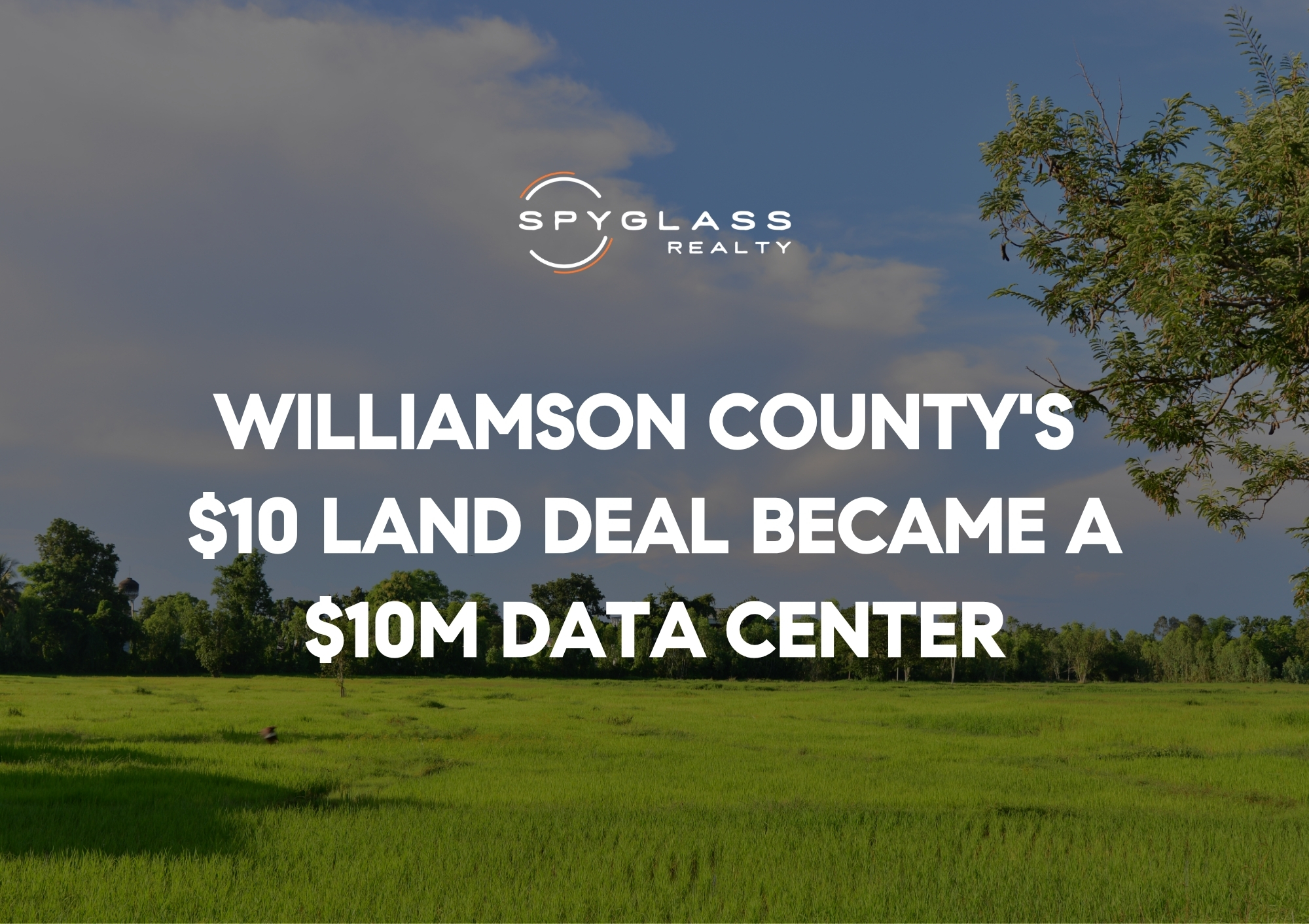
When farmland becomes a data center in Williamson County, it can happen faster and more quietly than most rural land buyers expect. In Taylor, an 87-acre tract that a family sold in 1999 for a nominal $10, with deed language expressing an intent that it be held as parkland, later changed ownership, sold for roughly $10 million, and is now on track to become a data center. City officials have said that the original wording reflected intent rather than a binding restriction, and that single distinction reshaped the property's entire future.
For anyone eyeing acreage in Georgetown, Taylor, Hutto, or the wider Williamson County corridor, this story is a practical lesson in how deeds, zoning, and regional growth actually interact. Good intentions on paper do not always carry legal weight, and the value of raw land can multiply once a higher use arrives.
Below, you will find what the Taylor case shows, how deed intent differs from an enforceable restriction, why data centers keep landing on cropland, and the specific checks that protect buyers and investors near Austin.
What happened when farmland became a data center in Williamson County?
A family sold 87 acres in Taylor for a nominal $10 in 1999, with deed language expressing that the land be held as parkland for the county. The tract later changed hands, sold for about $10 million, and is now planned for a data center. City officials say the parkland wording expressed intent, not a binding legal restriction, which is why the new use is moving forward.
The $10 deed and its parkland intent
A $10 conveyance is a common way families and landowners document a gift or near-gift while still recording legal consideration. The seller clearly wanted the ground preserved for public use, and the deed said so in plain words. The problem is that a statement of hope reads very differently from a covenant that runs with the land.
From nominal sale to a $10 million valuation
Over roughly two decades, the same acreage moved from a symbolic $10 to a reported $10 million price. That jump reflects Williamson County's transformation from farm country into one of the fastest-growing parts of the Austin metro. When a large employer or infrastructure user arrives, previously overlooked tracts become strategically valuable almost overnight.
Why the county says intent was not binding
In Texas, whether land use is limited depends on the exact legal instrument, not on what a seller wished would happen. Officials concluded that the parkland language documented a preference rather than a recorded, enforceable restriction tied to the title. That interpretation is the hinge the whole story turns on, and it is a warning to every buyer who assumes a deed's spirit will protect a property's future.
Deed intent versus deed restriction: why the wording matters
A statement of intent describes what a party hoped for, while a deed restriction is an enforceable limit that runs with the land and binds future owners. Zoning is a third, separate layer controlled by a city or county. Confusing these three is how buyers end up surprised by a data center next door.
| Mechanism | What it does | Binds future owners? | Who can change it |
|---|---|---|---|
| Deed intent language | States a wish or purpose | Often no | Courts interpret case by case |
| Recorded restriction or covenant | Legally limits use | Yes, runs with land | Named parties or court order |
| Zoning designation | Sets allowed uses | Yes, until changed | City or county government |
What a recorded restriction actually does
A properly drafted deed restriction or restrictive covenant limits how land can be used and binds everyone who owns it afterward. If the Taylor family had recorded an enforceable parkland covenant with clear reverter language, the outcome could have looked different. The lesson is that preservation goals belong in operative legal terms, not in an introductory recital of purpose.
How to make sure intent becomes enforceable
If you want land held for a specific purpose, work with a Texas real estate attorney to draft covenants, conservation easements, or reverter clauses that survive resale. Ordering a full title commitment before closing also reveals what really binds a parcel. Our complete guide to buying land in Austin and its costs and process walks through the due diligence steps that catch these issues early.
Why data centers keep landing on farmland near Austin
Data centers seek large, flat, buildable tracts with access to power, water, and fiber, and farmland near growing metros checks every box. Modern AI facilities consume 500 to 800 acres each. Williamson County's mix of open acreage and heavy tech investment makes it a natural target.
Taylor's semiconductor and tech corridor pull
Taylor is already home to major semiconductor manufacturing investment, and that kind of anchor draws supporting infrastructure like power upgrades and data facilities. Once a region is wired for large industrial loads, adjacent farmland becomes far more attractive to developers. That gravitational pull is exactly what turned an overlooked 87-acre parcel into a $10 million site.
National scale and rural pushback
More than 4,925 data centers are active or under construction across the country, according to American Farm Bureau Federation analysis cited by Farms.com. The buildout has sparked organized resistance, including a National Data Center Protest Day that produced 142 reported protests nationwide in July 2026, per the Calexico Chronicle. Developers have occasionally reversed course under community pressure, as one did days before a suburban rezoning vote near Chicago, the Chicago Tribune reported.
Power, water, and neighbor concerns
The same University of Illinois survey of 1,000 Americans found almost 58% fear their electricity bills will climb as these facilities draw enormous grid loads. Water use and loss of agricultural land ranked among the other top worries. If you own or plan to buy acreage near Austin, those neighbor-level concerns can affect resale demand and local approvals, so they deserve attention alongside the price.
What rural land buyers and investors should check in Williamson County
Before you buy rural land near Austin, verify the deed chain, current zoning, the future land-use map, and utility access, because any of these can quietly redirect a property's fate. The Taylor case shows that a parcel's future often depends on documents and plans that are not obvious from a drive-by. Order professional due diligence rather than relying on assumptions.
Read the full title commitment and deed history
- Title commitment. Have your title company list every recorded restriction, easement, and reverter tied to the parcel.
- Deed chain. Read prior deeds to separate binding covenants from mere statements of intent, like the Taylor parkland language.
- Survey. Confirm acreage, boundaries, and encroachments with a current survey, not the tax record alone.
Check zoning and the future land-use map
Current zoning tells you what is allowed today, but a city or county comprehensive plan hints at what is coming next. In fast-growing communities near Georgetown, Round Rock, and Leander, that plan can flag corridors targeted for industrial or infrastructure growth. Knowing this early helps you decide whether nearby change is an opportunity or a risk.
Understand water, utilities, and easements
Access to groundwater, municipal utilities, and transmission lines drives both farm viability and industrial appeal. If a parcel sits near heavy power infrastructure, it may be attractive to non-agricultural buyers later, which cuts both ways for value. For a broader orientation, our overview of where to buy a farm and ranch near Austin and our look at reasons to invest in Bastrop County land both cover the land factors that shape long-term returns.
Frequently asked questions about Williamson County land use
What is the difference between deed intent and a deed restriction in Texas?
Deed intent language describes what a seller hoped would happen with the land, while a deed restriction or restrictive covenant is an enforceable limit that binds future owners. Courts often treat a recital of purpose as non-binding unless it is written as an operative covenant with clear terms. In the Taylor case, officials concluded the parkland wording expressed intent rather than an enforceable limit. If you want a preservation goal to hold in Williamson County, have a Texas attorney draft it as a recorded covenant, not a wish.
Can a data center be built on land that was meant to be a park?
Yes, if the parkland goal was only expressed as intent and never recorded as a binding restriction, a later owner can generally pursue a different use subject to zoning approval. That is essentially what unfolded with the 87-acre Taylor tract. The determining factors are the legal instrument on record and the current zoning, not the original seller's hopes. Anyone buying near Taylor or Hutto should confirm both before assuming a neighboring tract will stay open.
How much land does a data center need in Williamson County?
Modern AI data centers can consume 500 to 800 acres each according to University of Illinois research, though individual campuses vary widely based on power and cooling design. Smaller facilities fit on far less, which is why an 87-acre parcel can still support one. In Williamson County, proximity to power infrastructure and fiber often matters more than raw acreage. That is why tracts near Taylor's industrial corridor draw outsized developer interest.
How do I protect rural land near Austin from unwanted future development?
The most durable protections are recorded legal tools such as conservation easements, restrictive covenants, and reverter clauses drafted by a Texas real estate attorney. A conservation easement, for example, can permanently limit development while potentially offering tax benefits. Informal promises or deed recitals of purpose rarely survive a resale, as the Taylor story shows. If preservation matters to you on acreage in Williamson County or the wider Austin metro, put it in enforceable writing before closing.
Are data centers driving up rural land values in Williamson County?
Large infrastructure users and tech employers can sharply raise nearby land values, as the Taylor parcel's move from a nominal $10 to a reported $10 million illustrates. At the same time, community concern over power costs and water use, including the roughly 58% of surveyed Americans worried about higher bills, can influence local approvals and neighbor sentiment. Both forces are active across Williamson County, so value effects vary block by block. A local agent can help you read whether a specific corridor near Georgetown or Taylor is trending up.
The bottom line for Austin-area land buyers
The Taylor tract shows how quickly rural ground can shift from a symbolic $10 gift to a $10 million industrial site, and how little a seller's good intentions matter if they never became enforceable law. In a county absorbing rapid growth, the real protections are recorded documents, current zoning, and a clear reading of the future land-use map.
Whether you are buying acreage to farm, to hold, or to invest, treat due diligence as the main event, not a formality. The parcels that change most dramatically are often the ones nobody watched closely.
Thinking about buying, holding, or protecting rural land in Williamson County? Let's talk through your options.
Talk to a Spyglass AgentDisclaimer: This article is for general educational purposes only and is not legal, tax, or financial advice. Every situation is different. Before making decisions about buying or selling a home, consult with your own real estate professional, lender, tax advisor, and other qualified professionals.