It is a good time to buy a house in Austin if you plan to stay five years or more and can afford the full monthly payment, because prices are down and buyers have real negotiating power. It is not a good time if you would be stretching your budget, since the average 30-year mortgage rate has climbed to 7.40%. The honest answer depends on your finances, your timeline, and the life you want here.
Key Insights for Austin Home Buyers
- Prices are lower: The Austin metro median fell 6.4% year over year to $412,000 in August 2026, and the City of Austin median was $560,000.
- Buyers can negotiate: City of Austin homes closed at 93.3% of list price in August, with sales activity down about 10% from a year earlier.
- Rates are the catch: The 30-year mortgage rate averaged 7.40% in early October 2026, up from 6.30% a year earlier.
- Owning costs about three times as much as renting: A $550,000 home with 20% down runs about $3,963 a month before maintenance, versus roughly $1,200 to $1,450 in rent.
- Time horizon decides it: Plan on staying at least five years. Under two or three years, renting usually wins.
- Cash matters as much as price: Down payment and closing costs can range from about $27,000 to more than $135,000 on a $550,000 home.
This guide walks through the signals that matter right now, what owning really costs compared with renting, how much cash you need, and who should buy or rent. If you want the payment math on waiting for lower prices or rates, read our companion post on whether to buy now or wait in the Austin real estate market.
Is Now a Good Time to Buy a House in Austin?
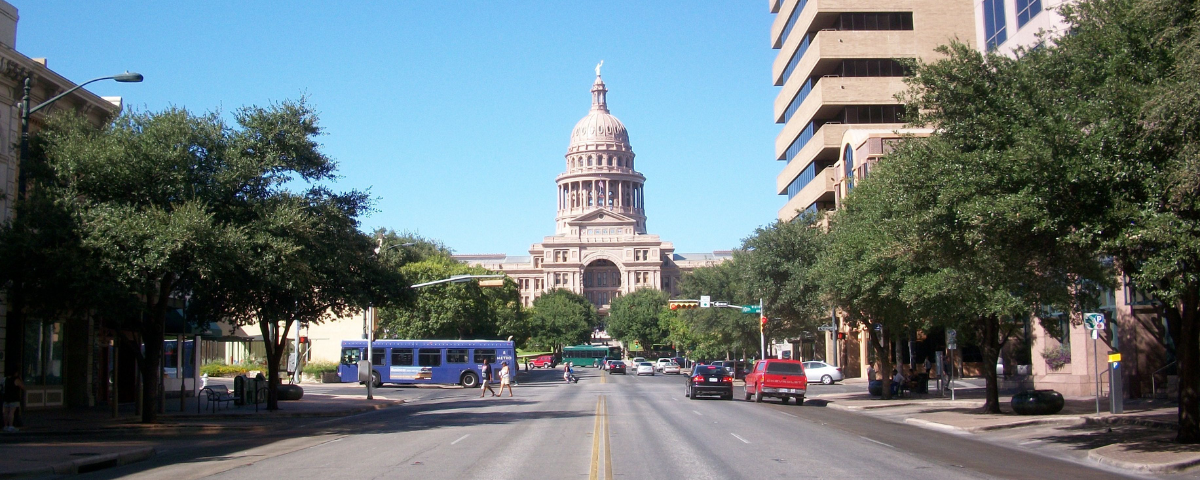
The market gives buyers more leverage than at any point since before the pandemic, but financing is expensive. Here is how the main signals stack up.
| Signal | Current reading | What it means for buyers |
|---|---|---|
| Prices | Metro median $412,000 in August 2026, down 6.4% year over year. City of Austin median $560,000. | Favors buyers: you are not buying at the peak |
| Negotiating power | Homes closed at 93.3% of list price in the City of Austin, up from 91.6%. | Favors buyers: room to negotiate, though discounts are narrowing |
| Mortgage rates | 7.40% for a 30-year fixed, up from 6.30% a year earlier. | Favors sellers and renters: borrowing costs are high |
| Sales activity | Closed sales down 10.3% and pending sales down 9.2% year over year. | Favors buyers: less competition |
| Price outlook | Zillow forecast a 4.6% decline through March 2027. | Mixed: waiting could save money, but forecasts miss |
| Seasonal timing | Realtor.com put the best Austin buying week at September 27 to October 3, 2026. | Favors buyers: demand is below its seasonal peak |
Sources: Hoodline (Unlock MLS, August 2026), Freddie Mac (week of October 8, 2026), Zillow forecast via Hoodline (May 2026), and CultureMap Austin (Realtor.com, September 25, 2026). Last updated October 2026.
The pattern is clear: conditions favor buyers on price and negotiation, while rates favor patience. That is why the right answer is personal. A buyer with a stable income, a solid down payment, and a long horizon can use today's leverage, while a buyer who would be stretched by a $4,000 monthly payment gains little from a lower sticker price. For a closer look at the data behind each signal, see our guide to Austin real estate pricing trends.
Renting vs. Buying in Austin: What It Costs Each Month
Renting is much cheaper month to month. A new buyer of a $550,000 home with 20% down pays about $3,963 a month before maintenance, while a renter pays about $1,174 to $1,429 for a one- or two-bedroom apartment.
| Monthly cost | Buying a $550,000 home (20% down) | Renting |
|---|---|---|
| Principal and interest (7.40%) | $3,046 | Not applicable |
| Property tax (about 1.25% a year) | $573 | Included in rent |
| Homeowners insurance (Austin average) | $344 | Not applicable |
| Rent | Not applicable | $1,174 (1-bedroom) to $1,429 (2-bedroom) |
| Estimated total | About $3,963 | $1,174 to $1,429 |
Calculation by Spyglass Realty. Rent figures from Apartment List (October 2026). Property tax uses the Ownwell median effective rate for Austin of 1.25%. Insurance is the MoneyGeek Austin average of $4,126 a year for $250,000 of dwelling coverage, so your quote may differ. Maintenance, HOA dues, and mortgage insurance are not included, and renters insurance is not included in the rent column.
New buyers also pay far more than existing owners. The Census Bureau reports median monthly owner costs of $2,679 for Austin homeowners with a mortgage, and $1,034 for those without one (2020 to 2024 data). Many current owners locked in lower prices and rates, so the gap between owning and renting is wider for anyone buying today. Median gross rent across all Austin rentals was $1,729, which measures a different set of units and a different period than the Apartment List figures above.
The monthly gap is only part of the story. Each payment on a mortgage builds equity, while rent builds none, and owning protects you from future rent increases on the principal and interest portion of your housing cost. The trade-off is lower flexibility and higher upfront costs. For a step-by-step breakdown of your own payment, use our guide on how to calculate a mortgage payment in Austin or the mortgage calculator.
Austin is a renter-heavy city, and that gives you time to prepare. The Census Bureau reports that 43.4% of Austin housing units are owner-occupied, which means about 56.6% are rented. A deep rental market means you can rent while you build savings, as long as you plan to buy rather than drift.
Source: U.S. Census Bureau QuickFacts, Austin city, 2020 to 2024 estimates.
How Much Cash You Need to Buy in Austin
You need more than a down payment. Plan for the down payment, closing costs, moving costs, and an emergency fund. Bankrate puts typical buyer closing costs at 2% to 5% of the purchase price nationally, which would be about $11,000 to $27,500 on a $550,000 home. The table below shows how the down payment changes your monthly principal and interest.
| Down payment option | Down payment on $550,000 | Monthly principal and interest | Notes |
|---|---|---|---|
| 3% (some conventional loans) | $16,500 | $3,694 | Mortgage insurance is added |
| 3.5% (FHA) | $19,250 | $3,675 | FHA mortgage insurance is added. Travis County FHA limit is $571,550 |
| 5% | $27,500 | $3,618 | Mortgage insurance is usually still required |
| 10% | $55,000 | $3,427 | Mortgage insurance is usually still required |
| 20% | $110,000 | $3,046 | No private mortgage insurance on a conventional loan |
Calculation by Spyglass Realty at 7.40% on a 30-year fixed loan, principal and interest only. Loan limits for Travis County in 2026: conventional and VA $832,750, FHA $571,550. VA loans can allow no down payment for eligible borrowers. Rate source: Freddie Mac. Last updated October 2026.
A smaller down payment lowers your cash need but adds mortgage insurance and a larger loan, so the monthly cost and total interest rise. If cash is the barrier, ask a lender about assistance programs. The Texas State Affordable Housing Corporation offers the Home Sweet Texas program, which raised its income limit to 150% of area median family income. For the Austin metro, that limit is $201,600. Our Austin home loans guide explains the main loan types in more detail.
How Long Should You Stay for Buying to Make Sense?
Plan to stay at least five years, and ideally seven to ten. Buying has large upfront costs: the down payment, closing costs, inspections, and early repairs. Selling later adds agent fees and moving costs. It takes time for equity from your payments and any appreciation to offset those costs.
With prices softening and a possible further decline, a short stay carries extra risk. If you bought in 2026 and had to sell within two or three years, flat or falling prices could leave you with little or no equity after selling costs. If your job, family, or plans are uncertain, renting keeps your options open.
Financial Readiness Checklist
Ask yourself "Can I stay comfortable after I buy?" rather than "Can I get approved?" You are more likely to be ready if:
- You have steady income and expect to work in or near Austin for several years.
- You have saved a down payment, closing costs, and an emergency fund covering several months of expenses.
- Your total monthly debts, including the future mortgage, fit comfortably within your budget.
- Your credit is strong enough to qualify for a rate you can live with.
- You can absorb surprise costs such as repairs, HOA dues, higher insurance, or a property tax reassessment.
The income bar is high. Using the common guideline of keeping housing costs under 28% of gross income, the roughly $3,963 monthly cost of a $550,000 home with 20% down calls for about $170,000 a year in household income. The Census Bureau reports Austin's median household income at $93,658 (2020 to 2024), which is why many buyers look at lower price points, larger down payments, or suburbs with lower prices. Our guide to the best neighborhoods to live in Austin can help you match a budget to an area.
Ongoing costs matter too. Texas has no state income tax, but property taxes are significant, and insurance, HOA dues, and maintenance add to the total. If those numbers feel tight on paper, waiting and building savings is the safer move.
When Buying Makes Sense and When Renting Is Smarter
When buying makes sense
Buying is more likely to be the right move if you:
- Plan to stay in the area for at least five years.
- Have a stable income and can cover the full payment, taxes, insurance, and maintenance comfortably.
- Have set aside reserves for job changes, repairs, or unexpected expenses.
- Want stability and control over your housing costs.
- Can use today's leverage to negotiate price, repairs, or closing cost credits, and refinance later if rates fall.
When renting is smarter
Renting is likely the better choice if you:
- Might relocate or change jobs within two or three years.
- Would use nearly all your savings on the down payment and closing costs.
- Are still deciding which Austin neighborhood fits your lifestyle. Our guides to living in North Austin and other areas can help you explore.
- Need more time to strengthen your income, credit, or debt situation.
- Prefer lower monthly costs and no responsibility for repairs.
Renting is not wasted money if you use the savings well. If the monthly difference goes into retirement accounts, an emergency fund, or a down payment, renting can be a strategic choice.
Best Time of Year to Buy in Austin
Early fall is often a strong window. Realtor.com's analysis, reported by CultureMap Austin on September 25, 2026, named September 27 to October 3 as the best week to buy in the Austin metro. That week had about 22% more active listings than an average week and demand roughly 43% below the annual peak. Prices were projected to be about 6.6% below their seasonal peak, which could mean more than $36,000 in savings on the $549,000 median-priced home in city limits.
That window has just passed, but it is not a deadline. Realtor.com senior economist Hannah Jones said early fall may offer the broadest selection of new listings, while later in the season may bring more price flexibility. Spring and early summer typically bring more listings and more competition. Read our guide to the best time to buy and sell in Austin for the full seasonal picture.
Source: CultureMap Austin, summarizing a Realtor.com housing report.
Should You Wait for Rates to Drop?
Waiting for lower rates is a gamble. The Federal Reserve raised its target rate by a quarter point on September 16, 2026, and the average 30-year mortgage rate rose to 7.40% in early October. If rates fall later, you can refinance. If they rise, a lower price may not offset a higher payment. Our post on buying now or waiting shows five scenarios with exact payments, and our explainer on what factors impact mortgage rates covers what moves them.
The practical approach is to buy when you find a home that fits your budget and plans, not when you think rates or prices have hit bottom. Trying to time the exact low usually backfires.
How to Decide: Practical Steps for Austin Buyers
- Compare renting and buying with your own numbers. Add principal and interest, property tax, insurance, and a maintenance buffer for a home in your price range, then compare it with your current rent.
- Talk to a lender before you fall in love with a home. A local lender can clarify your price range, your monthly payment, and what you would need at closing, and may show how a better credit score or lower debt could change your options.
- Explore neighborhoods, not just houses. Some Austin neighborhoods are still competitive, while others offer more room to negotiate for the same budget.
- Learn the local rules and costs. Our critical tips for first-time home buyers and questions to ask when buying a home cover pre-approval through closing.
- Lean on expert guidance. An experienced local agent and a trusted lender can help you understand trade-offs, spot red flags, and negotiate with confidence.
Not sure if buying now fits your budget and timeline? Talk through your options with an Austin real estate specialist at 512-640-2077 or contact us here for a personalized rent-versus-buy review.
The Bottom Line
Austin is neither booming nor busting. It is a market where buyers can negotiate but pay a lot to borrow. If you are financially prepared and plan to stay for several years, buying a home in Austin can still be worth it. If you value flexibility or are still building your financial foundation, renting remains a smart, low-risk choice. Base your decision on clear numbers, not headlines or pressure to act now.
Frequently Asked Questions About Buying a House in Austin
Is now a good time to buy a house in Austin?
It can be, if you plan to stay five years or more and can afford the payment comfortably. Buyers have more leverage than during the boom: the metro median price fell 6.4% year over year to $412,000 in August 2026, and City of Austin homes closed at 93.3% of list price. The tradeoff is borrowing costs, with the 30-year mortgage rate averaging 7.40% in early October 2026 (Freddie Mac). If you would be stretching to make the payment or might move within two or three years, renting is usually safer.
Is it cheaper to rent or buy in Austin right now?
Renting is cheaper month to month. A one-bedroom rents for about $1,174 and a two-bedroom about $1,429 (Apartment List, October 2026), while owning a $550,000 home with 20% down costs roughly $3,963 a month including principal, interest, property tax, and insurance, before maintenance. Buying builds equity and fixes your principal and interest payment, so the better choice depends on how long you will stay.
How long should I plan to live in a home before buying in Austin makes sense?
A common guideline is at least five years, and seven to ten is safer. Closing costs, which commonly run 2% to 5% of the price, and the cost of selling need time to be offset by equity growth. If you may move within two or three years, renting or waiting usually carries less risk.
What time of year is best to buy a house in Austin?
Realtor.com's 2026 analysis named September 27 to October 3 as the best week to buy in the Austin metro, with about 22% more active listings than an average week and demand roughly 43% below its annual peak. A Realtor.com economist said it is not a deadline: early fall may offer the widest selection, while later in the season may bring more price flexibility. Seasonal patterns matter less than your finances and the specific home.
Should I wait for mortgage rates to drop before buying in Austin?
Not necessarily. Rates are hard to predict: the Federal Reserve raised its target rate on September 16, 2026, and mortgage rates rose to 7.40%. If you are financially ready, you can buy a home you can afford now and refinance if rates fall later, though refinancing is not guaranteed. If the payment feels tight today, use the time to build savings and improve your credit instead.
Can I still buy a house in Austin with a low down payment?
Yes. FHA loans allow 3.5% down, some conventional loans allow 3% down, and eligible veterans can use VA loans with no down payment. Texas also offers the Home Sweet Texas program through TSAHC, which has an income limit of 150% of area median family income, listed at $201,600 for the Austin metro. Low-down-payment loans usually add mortgage insurance, so compare the full monthly cost with a local lender.
Sources: Freddie Mac, InvestingLive (FOMC decision), Hoodline (Unlock MLS and Redfin), Hoodline (Zillow forecast), CultureMap Austin (Realtor.com), U.S. Census Bureau, Apartment List, Ownwell, MoneyGeek, Bankrate, Homebuyer.com loan limits, TSAHC. Figures change often. This article is for general education and is not financial advice. Last updated October 2026.